
What is the Commission for Real Estate Agents in Texas?
If you're thinking about a career in real estate, one of the first questions you'll ask is: how do I actually get paid? In Texas, agents earn their income through commission — a percentage of the home's sale price — rather than a fixed salary. Understanding how that commission flows from a transaction to your pocket is one of the most practical things you can learn before getting your license.
Here's what you need to know.
What Is the Average Real Estate Commission in Texas?
There is no legally set commission rate in Texas. Federal antitrust law prohibits the industry from establishing standard rates, and what agents actually earn varies by transaction, brokerage model, and market conditions. That said, recent data puts the average total commission in Texas at around 5.85% of a home's sale price. In practice, you'll see rates negotiated anywhere from 1% to 6% depending on the listing agreement.
How Commission Splits Work
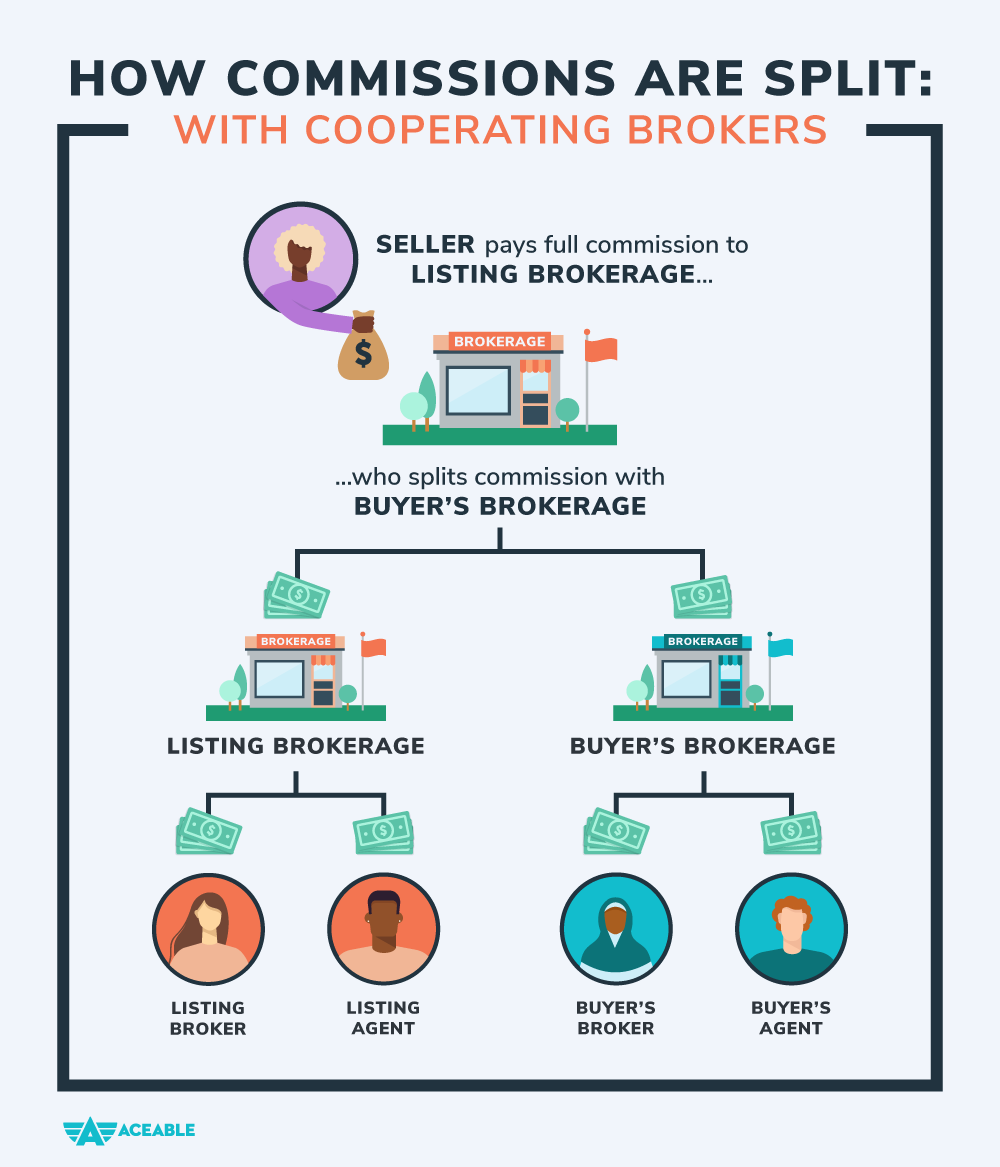
When a home sells, the total commission doesn't go directly to one agent — it gets divided among everyone involved in the transaction. A typical residential sale involves four parties sharing the commission: the listing broker, the listing agent, the buyer's broker, and the buyer's agent.
Here's how that plays out with a real example. Say a home sells for $300,000 and the seller and listing agent agree on a 6% commission. That's $18,000 in total commission. If the listing brokerage and buyer's brokerage agree to a 50/50 split, each side receives $9,000. Each agent then splits their brokerage's share with their sponsoring broker — and if that split is also 50/50, each of the four parties walks away with $4,500.
| Party | Amount |
|---|---|
| Home sale price | $300,000 |
| Total commission (6%) | $18,000 |
| Listing broker | $4,500 |
| Listing agent | $4,500 |
| Buyer's broker | $4,500 |
| Buyer's agent | $4,500 |
Keep in mind that agent-broker splits vary widely. Some brokerages offer a 70/30 or even 80/20 split in favor of the agent, especially as you build a track record. The split you negotiate when you join a brokerage directly affects how much of each commission check you take home — which is worth understanding before you choose a sponsoring broker in TexasTexas What Is Sponsoring Broker Career Center.
Who Pays the Commission — the Buyer or the Seller?
Traditionally, the seller has paid the full commission, with the cost effectively built into the home's list price. But contract changes that took effect in Texas in 2025 clarified that each party is responsible for the brokerage fees they agree to in writing. Sellers can still agree to contribute toward a buyer's brokerage fees as part of negotiations, but that's no longer assumed. The bottom line: who pays what comes down to what the buyer and seller negotiate.
Alternative Commission Models
Not every brokerage in Texas operates on the traditional 5–6% model. Some firms — most notably discount brokerages — have moved toward flat fees or reduced listing rates. These models can offer sellers cost savings at the listing stage, but it's worth reading the fine print carefully. Reduced-fee listings typically don't include buyer's agent compensation, and the level of service can differ from what a full-service brokerage provides.
What this shift makes clear is that commissions in Texas are negotiable. Sellers and buyers can weigh traditional full-service arrangements against alternative fee structures depending on their priorities. Understanding those options is part of what makes a knowledgeable agent valuable — clients look to you to help them make informed decisions.
What Texas Real Estate Agents Actually Earn
According to Indeed's Texas real estate agent salary dataReal Estate Agent Salaries TX Career, agents in the state earn an average of about $91,585 per year. That figure varies widely based on sales volume, market, and experience — newer agents typically earn less while they build their pipeline, while top producers can exceed that average significantly. Commission-based income also means your earning potential isn't capped the way a salaried role would be. The more transactions you close, the more you make.
Beyond the income potential, many agents point to schedule flexibility as one of the biggest draws of the career. If that kind of autonomy appeals to you, it's worth understanding the full picture of what the job looks like day-to-day. Our guide to flexibility in a real estate careerReal Estate Career Offers Flexibility Blog covers what that actually means in practice.
Ready to Get Your Texas Real Estate License?
The first step toward earning commissions is earning your license. AceableAgent's Texas pre-licensing course is approved by the Texas Real Estate Commission. It covers all 180 required hours across six courses and is designed to work around your schedule — whether you're studying on your phone during a lunch break or working through material at your own pace at home.
See if AceableAgent's Texas real estate course is right for you.Texas Real Estate License
Choose a State and Course
Learn more about getting your Texas real estate license and get exclusive offers